
CASE STUDY
AWS
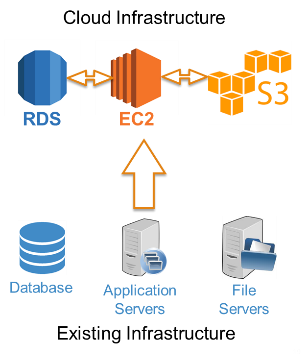
Problem: The survey company conducts surveys for its varied clientele and provides them with the reports of their findings. The surveyors used to collect data using their mobile devices and submit the same to the backend servers. In addition to this the company had an ERP and CRM solution that ran on their in-house infrastructure. The company has several branch offices who were connect to the company’s network through VPN.
The company wanted to move their existing infrastructure to cloud platform to achieve scalability and high availability
Solution: Performed initial assessment of the company’s applications. Except for the survey application, all others were standard application and were ideal candidates for forklift migration. The survey application had to be customized to work in the AWS environment. A combination of EC2 – RDS – S3 was used to migrate the portfolio of applications to AWS.
Benefits: The entire migration was done while ensuring zero downtime for the company. Since AWS assures 99.9% uptime, high availability was achieved as a result of this migration. The overall infrastructure maintenance cost was reduced while saving the capex that the company would have incurred for upscaling.
Problem: The truck manufacturing company has a plant in Thailand where they wanted the information gathered during the final Axle testing to flow to the preceding and succeeding processes seamlessly.
Solution: The solution involved fitting the test rig with various sensors to track various test parameters. The information received from the sensors was then analyzed and based on the deviation trends the necessary triggers were passed to the various assembly robots so that the deviation could be corrected.
In addition to this the information on the trucks that passed the test was passed on to the internal MIS and Inventory portal.
Benefits: The effective downtime for recalibration of the Assembly robots was brought down by 66%. Earlier it was being done once at the beginning of the shift which has now been reduced to once a day.
IoT